Publication
Spring 2026: Commodity Frontiers Initiative, online
The Confluence of European Water Bodies or How to Flow Together
Marjolijn Dijkman, Christiane Bosman, Pietro Consolandi, Xandra van der Eijk
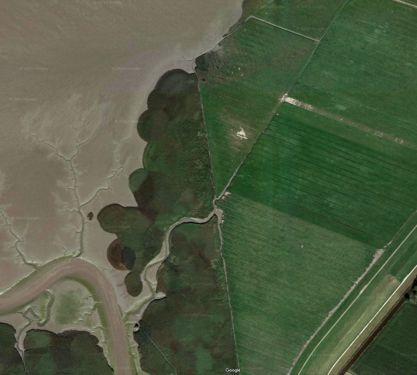
The Confluence of European Water Bodies, initiated by the Embassy of the North Sea, ILP Mar Menor, and TBA21–Academy, has grown into a network of over 30 European rivers, seas, lakes, glaciers, and lagoons since 2023. It brings together artists, activists, and researchers to push for water ecosystems to be recognized as legal, cultural, and political actors within democracy. Rooted in the “Rights of Nature” framework, the movement advocates for a fundamental shift away from viewing nature as property, toward a more relational and representative approach. The initiative explores and embodies new ways to effectively represent water, raising fundamental questions about who decides, who speaks, and how rights are enforced in a world still dominated by human-centered systems. This conversation explores how art plays a crucial role in this shift by creating an emotional, cultural, and philosophical space for change.
___
Editorial Introduction Conservation Frontiers
Freg J. Stokes
The key here, of course, is the commodity. A forest, savanna, or mountain range does not have to be destroyed to be commodified. On conservation frontiers, plants, animals, and land- or seascapes are notionally protected, but living beings, knowledges, and relationships are also abstracted from their surroundings and repackaged as private property or as consumer items for select audiences. Perversely, the expansion of visibly destructive commodity frontiers and the obliteration of neighboring ecosystems can increase a conservation area’s market value by making it more unique; more worthy of protection and investment. For instance, thickly forested national parks and ecotourism sites – typical conservation frontiers – sit alongside crop monocultures and open cut mines, their edges suggesting boundaries where exploitation ends and protection begins. But both frontiers are subject to, and reproduced by, similar market forces and logics.
Indeed, the patchwork landscape of contemporary capitalism has emerged from the symbiotic and dialectical relationship between conservation and destruction.
How did this come about? The modern conception of conservation developed in tandem with the global expansion of capitalism. During the sixteenth and seventeenth centuries the administrators of mining and timber frontiers in England and Germany began to express concerns about forest depletion, and proposed that certain areas of woodland be reserved, so as to provide other industries with lumber for longer periods of time (Radkau, 2012). Both the European encounter with Indigenous land care and the influence of German forestry sparked the creation of the first forest reserves in colonial India in the nineteenth century (Grove, 1995; Saldanha, 1996). These reserves were created for explicitly economic purposes, locking out local communities to provide wooden sleepers for the railways of the British Raj (Das, 2015; Sivaramakrishnan, 1999).
Yellowstone, established in the US in 1872, is often cited as the world’s first national park (Yonk et al., 2018). However, Bogd Khan mountain in Mongolia, declared a protected site by the Qing dynasty in 1778, could also lay claim to the title. Bogd Khan was a very different type of conservation area, a sacred site reserved for Mongolians to carry out official Buddhist ceremonies within the broader Chinese Empire (Marcus, 2025). US national parks such as Yellowstone and Yosemite, on the other hand, were established on a settler colonial frontier, and premised on the expulsion of Indigenous Peoples such as the Shoshone and Ahwahneechee (Spence, 1999). The same logic played out across Britain’s settler colonies, with a wave of national parks also founded on stolen Indigenous land in Australia (Royal National Park in 1879) and Canada (Banff National Park in 1885) (Harper and White, 2012).
The early US environmental movement was split into two major camps. “Preservationists” such as John Muir demanded that these protected areas be kept in a “pristine” and “wild” state, free of human interference (once the humans living there had been removed) (Layden et al., 2025). ‘Conservationists’ such as Gifford Pinchot, who was influenced by British and German forestry methods, instead advocated for the sustainable extraction of resources from state reserves (Bankoff, 2009). Pinchot, in fact, claimed to have invented the term ‘conservation’ in its modern sense. Pinchot and his ally, President Theodore Roosevelt, saw the government as playing a key role in the management of protected areas, not to undermine capitalism but to save it from its own tendency, when left unchecked, towards the rampant consumption of resources (Meyer, 1997).
As such, this first iteration of the global conservation movement can be seen as an attempt at reform within capitalism, promoting the long-term management of certain commodity frontiers. A dual system of national parks and national forests was established in the US, to provide leisure sites for white tourists and a reserve supply of water, timber and other resources for the nation as a whole (Lee et al., 2023). This was a business-friendly model: American corporate dynasties such as the Rockefellers gained prestige by financing new national parks both in the US and in allied states such as Brazil, while also profiting from the opening of new oil, mining and agribusiness frontiers in the same countries (Chernow, 1998; Silva, 2023; Winks, 1997).
Nevertheless, these conservation zones have always been contested frontiers. Tongariro, the first national park in New Zealand, was established on land offered to the Crown in joint custodianship by Horonuku Te Heuheu Tukino IV, paramount chief of the Ngāti Tūwharetoa, in 1887. Horonoku took this measure to prevent the sacred mountains in the region from being sold to colonists. Here another type of relationship with land, one with parallels to the aforementioned example of Bogd Khan Mountain, clashed and intermeshed with the British system of public and private land ownership. While the New Zealand government subsequently attempted to exclude the Ngāti Tūwharetoa and other Māori groups from management of the park, Horonoku’s initial strategic decision laid the basis for ongoing Māori claims to this territory (Waitangi Tribunal Report, 2013).
The relationship between settler colonialism and conservation frontiers continues today. Since its foundation in 1947, the state of Israel has used afforestation as a strategy to occupy Palestinian land. Israeli forest reserves are often established in strategic locations, dispossessing Bedouin communities and obstructing the return of Palestinian refugees to their homelands (Sasa, 2023). Once again though, it is not only the settler colonial state that carries out environmental strategies. In response to the destruction of olive groves and other fruit-bearing trees by Israeli forces, Palestinians activists launched the Million Tree Campaign, replanting fruit trees to resist occupation and assist Palestinian food sovereignty (Arab Group for the Protection of Nature, 2024).
Since the political upswell of the 1970s, environmentalists, Indigenous movements and other traditional communities have increasingly worked together to establish new conservation areas, often with overlapping systems of land care and territorial rights. In the Brazilian Amazon, these collaborations have been a key cause behind the net decrease in deforestation rates over the course of this century (Qin et al., 2023; RAISG, 2015). As Loren Racine notes in his conversation with Mehra Gharibian, even on the Great Plains of North America, which have been devastated by expanding agricultural frontiers over the last two centuries, there is still scope for dialogue and collaboration between outside conservationists and Indigenous communities.
Divisions persist in many regions, however, between local communities and outside organizations that continue to view conservation sites as wilderness areas that should be emptied of any human presence. The commodification of wildlife in eastern and southern Africa offers a prime example of this phenomenon, with the game hunting of the colonial era leading to the creation of a mosaic of militarized, exclusive, state-run wildlife parks across the region (Bollig et al., 2023). Nevertheless, as David Andrew Wardell’s article highlights, in Zimbabwe and elsewhere community-based conservation campaigns are challenging this colonial model. These challenges can take place at a fundamental philosophical and linguistic level, as can be seen in Siphesihle Mbhele and Ayanda Madlala on “slow process methodology” amongst communities removed from the iSimangaliso Wetland Park in South Africa. As Mbhele points out, in isiZulu, there is no word for ‘conservation’ – the concept itself is an imposition by urban elites that does not capture local relationships to animals, plants, land and water.
Capitalism has a tendency to create crises, then profit from the new markets created by these crises. Climate change is the most obvious current example, with business interests promoting carbon markets as a mechanism to reduce greenhouse emissions, despite repeated studies demonstrating the profound flaws in these systems (Cullenward et al., 2023; Trencher et al., 2024). Carbon pricing has opened up another method for commodifying forests: various Indigenous territories in the Amazon and Indonesia have now been designated as carbon sinks, and drawn further into global financial speculation networks. The UN’s REDD+ mitigation framework, which promotes these programs, has been criticized by multiple Indigenous organizations for allowing human rights violations, with carbon credit schemes excluding some communities from their land while entrapping others in debt cycles (Dehm, 2021; Global Forest Coalition, 2024).
After half a century of neoliberalism, the language of green capitalism has entered all spheres of public life. Many scientists and conservationists now describe groups of plants and animals as offering “ecosystem services,” as if they were Uber drivers or Airbnb hosts (Greiner and Bollig, 2023). In Brazil, both Indigenous activists and the colonists invading their land are designated as “local stakeholders,” making an asymmetrical war sound like a corporate board meeting (Søndergaard and Dias de Sá, 2023; Wood and Oliveira Carlos de Morais, 2022). In south and eastern Europe, as George Iordachescu’s article points out, conservation projects such as rewilding can aid new forms of green capital accumulation. Globally, forests and rivers are classified as forms of “natural capital,” rendering them quantifiable and exchangeable (Costanza et al., 1997). Ultimately, if the economic argument doesn’t justify their continued existence, they can also be rendered destroyable. The subsequent expansion of commodity frontiers has reached the ocean seabed, with Emily C. Melvin’s article noting that a scramble is now underway to commodify the genomes of marine organisms, sometimes with ostensible conservation purposes.
An array of social and workers’ movements are challenging this world view. Even in Europe, one of the core areas of historical capitalism, organisations such as “The Confluence of European Water Bodies” are contesting legal norms, calling for water ecosystems to receive recognition as democratic actors in their own right. As Sofyan Ansori and Farhan observe in their article, in the case of Indigenous Dayak environmental workers in the forests of Kalimantan, the problem can also run in the other direction: ideas of Indigenous labour as noble, sacred, and self-sacrificing can hide a neoliberal reality where Dayak workers need, and are demanding, fair payment for their work.
If the struggles outlined in these articles seem difficult, bear in mind that the billionaire owner of Amazon, Jeff Bezos, has proposed that in the future all of humanity should be expelled to space colonies. Those who could afford the rocket trip would then “visit Earth the way you visit Yellowstone National Park” (Kahn, 2021). Bezos’s vision, while bizarre, also takes the logic of settler colonial conservationism to its grim conclusion: the final and complete separation of humans from an imagined wilderness via global eviction.
On the plus side, future campaigns against this megalomaniacal scheme could at least help build alliances between Indigenous and non-Indigenous communities, in a shared fight to prevent the transformation of our entire planet into a pay-to-visit conservation frontier.
_
The Commodity Frontiers Initiative (CFI) is a network of scholars, research teams, artists, and civil society organizations from all over the world. With more than 25 partner institutes, CFI collaborators have been working extensively on global commodity production, rural societies, labor history, the history of capitalism, and social and ecological frictions and capitalist fixes in the global countryside. Collaborators have published some of the most important books, articles, and reports in their fields. Together they are expert on a wide range of global commodities, covering all the principle producing regions of the world, from the early modern period to the present day, employing a range of approaches from social and economic history, anthropology, sociology, political science, ecology, and development studies.
The Commodity Frontiers Initiative aims to systematically catalogue, study and analyze a wide variety of commodity frontiers over the past 600 years. By providing a long historical perspective on problems that are often assumed to be modern, and linking historical and contemporary research, the Initiative endeavors to recast our thinking about issues of sustainability, resilience, and crisis and thus contribute to the politics of our own times.
The CFI operates through the leadership of Mindi Schneider (Brown University), Sven Beckert (Harvard University), Eric Vanhaute (Ghent University), and Ulbe Bosma (International Institute of Social History).