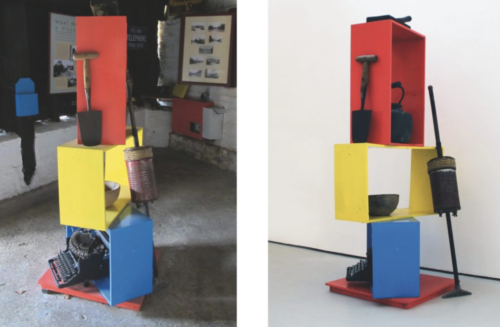
Conversation Piece & Installation
2011 - 2026 (ongoing)
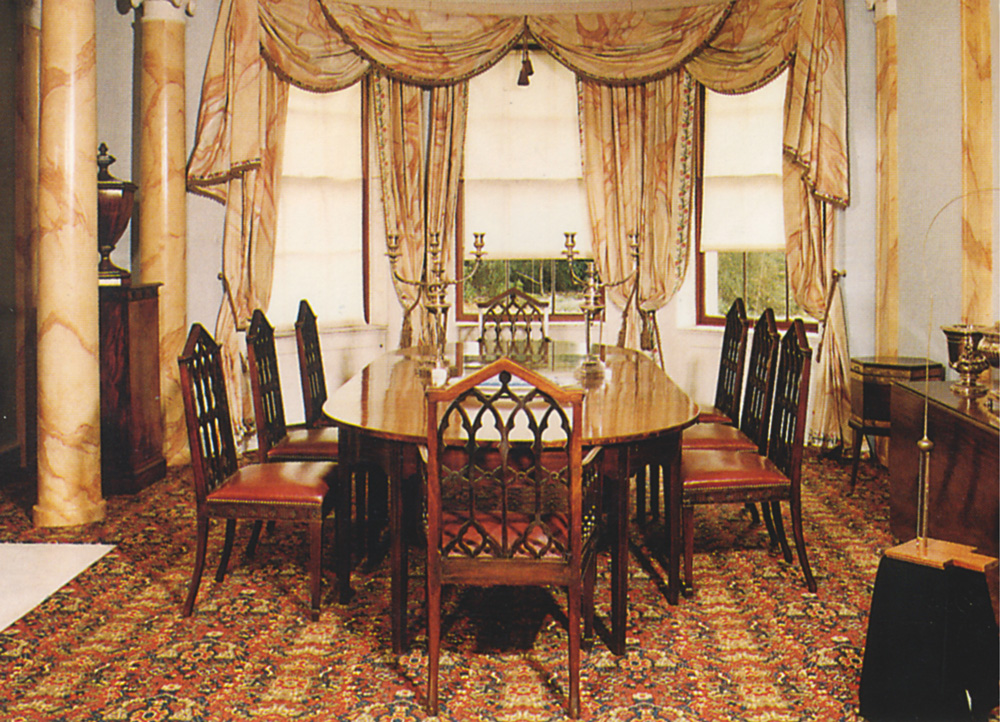
Original Lunar Table, Soho House, Birmingham, UK
LUNÄ is an art installation and conversation piece that revisits the legacy of the 18th-century all-male Lunar Society of Birmingham, a gathering of enthusiasts and lay scholars who met on full moon nights to discover and debate new ideas. Formed in the Midlands between 1765 and 1813, the Lunar Society brought together amateur experimenters, tradesmen, and artisans for lively dinner conversations, their journey home lit by the full moon.
Members included Erasmus Darwin, the entrepreneur Matthew Boulton, the engineer James Watt, the polymath Joseph Priestley, and the potter and social reformer Josiah Wedgwood. Their debates spanned a wide range: electricity and chemistry, steam power and industrialization, botany and evolution, education and political reform, theology and moral philosophy. The “Lunatics,” as they were called, transformed science and changed the world, and many were vocal supporters of abolitionism, female education, and social reform. They were central figures in the rise of modern science in Europe, a project that promised universal progress while simultaneously fuelling colonial extraction, the dispossession of other worlds, and the systematic exclusion of women and non-European thinkers from the very idea of progress they championed.
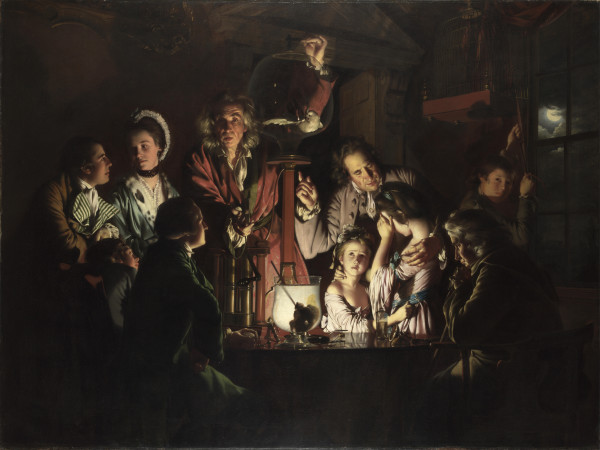
An Experiment on a Bird in the Air Pump, Joseph Wright (with Lunar full moon reference)
Three centuries later, LUNÄ critically reflects on the residues of this momentous period and expands on topics the original society may have discussed. LUNÄ consists of a facsimile of the original Lunar table, paired with eight IKEA chairs; the Enlightenment’s optimism collapsed into its globalized, extractive legacy. Each conversation, in sync with the full moon, features a high tide of ideas, concepts, and questions, instigating concordances between what is current and exciting in science, philosophy, and the social imagination. The LUNÄ talks expand the questions the original society raised, while opening them to the voices, perspectives, and knowledge systems it overlooked or erased: decolonial, feminist, and more-than-human ways of thinking the Lunatics didn’t invite to the table.
“I SELL HERE, SIR, WHAT ALL THE WORLD DESIRES TO HAVE — POWER.” – Matthew Boulton on the Boulton & Watt Factory, Birmingham, 1776
Since 2011, LUNÄ has convened across contexts and continents. Two LUNÄ Talks in 2019 explored the ecological and economic consequences of lithium and cobalt extraction in the DRC. In 2022, a New York edition centred on memory devices – past and future, bodily and external, real and imagined. A 2024 edition at Kunsthalle Mulhouse, catalysed by the second LUNÄ letter from political scientist Cara New Daggett, interrogated energy transition and the history of infrastructure. Most recently, a 2025 edition explored how Enlightenment thought, industrialization, and colonization have shaped water bodies, and what paradigm shifts are needed to restore both aquatic ecosystems and our relations with the more-than-human world.
Initiated by: Marjolijn Dijkman
LUNÄ was commissioned by IKON Gallery in Birmingham and Spike Island in Bristol, UK (2011). This edition is activated in Brussels at Enough Room for Space and travels throughout Europe.
LUNÄ (II) was commissioned by the 11th Shanghai Biennale (2016). This edition is part of the Power Station of Art Collection, Shanghai, CN, and LUNÄ (III) was commissioned by 601 Artspace in New York, US (2022).
LUNÄ has been presented and activated at: IKON Gallery in Birmingham, UK (2011); Spike Island in Bristol, UK (2011); NiMK in Amsterdam, NL (2011-2012); Forum Stadtpark in Graz, AT (2012); Onomatopee in Eindhoven, NL (2012); Fig. 2, ICA (Institute of Contemporary Arts), London, UK (2015); Museum Boerhaave, Leiden, NL (2015); Drents Museum, Assen, NL (2016); ASTRON (Dutch Institute for Radio Astronomy), Dwingeloo, NL (2016); The 11th Shanghai Biennial, Shanghai, CN (2016 – 2017); Performatik17, Performance Art Biennial, Brussels, BE (2017); BOZAR, Brussels, BE (2017); Coltan as Cotton, 9th Contour Biennale, Mechelen, BE (2019); Cargo in Context, Amsterdam, NL (2019); Edith Russ Haus, Oldenburg, DE (2021); 601 Artspace, New York, US (2022); CC Strombeek, Strombeek, BE (2022); La Kunsthalle Mulhouse, Mulhouse, FR (2024), ENACT Festival, Brussels, BE (2025), Enough Room for Space, Drogenbos, BE (2011-ongoing)
Invited contributors for public meetings included so far: Merve Bedir, Shivant Jhagroe, Annelies Kuypers, Ifor Duncan, Cara New Daggett, Fanny Lopez, Clémence André, Marie Lechner, Jennifer Tucker, André Fenton, Elaine Sulivan, Musasa, Maarten Vanden Eynde, Esther De Haan, Patricia Fara, Dries Bols, Raf Custers, Jeroen Cuvelier, Zheng Li, Sammy Baloji, Femke Herregraven, Georges Senga, Karin Lurvink, Sven Beckert, Wouter Elsen, Eric Vanhaute, Remy Jungerman, Helen Elands, Alioum Moussa, Christine Chivallon, Jean Katambayi Mukendi, Shuddhabrata Sengupta, Li Bin, Juntai Shen, Lu Ding, Sun Zhengfan, Miao Qihao, Jia Qin, Zhu Dayi, Tang Fei, Liao Fei, Benny Shaffer, Tian Liu, Michael Garrett, Taede Smedes, Daniela de Paulis, Roy Smits, Jaap Beuker, Alice Smits, Enno Bregman, Peter Pels, Dirk van Delft, Dorien Zandbergen, George van Hal, Anke Bangma, Jaap van de Herik, Maarten Lamers, Fatoş Üstek, Cathy Haynes, Stephen Boyd Davis, Jay Griffiths, Maarten Speekenbrink, Magda Osman, Jamie Ward, Ramon Amaro, Emily Penn, Philip Sheldrake, Tom Trevatt, Rosalie Doubal, Steven Cairns, Francesca Laura Cavallo, Helene Kazan, Caroline Thomas, Mark Fisher, Caroline Edwards, Owen Cotton-Barrat, Murray Shanahan, Rebecca Bligh, Erwin Fiala, Ulrich Hohenester, Mary Margaret Rinebold, Lisa Skuret, Kaz, Jean Matthee, Ole Hagen, Vanda Playford, Soledad Garcia, Richard Sheldon, Malcolm Dick, James H. Andrew, Deirdre Kelly, Chris Ramsden, Rex Harris, Clive Dutton, Tony Harvey, Ruth Reed, David Tittle, Felicity Allen, Nancy Evans, Colin Gale, Kate Iles, Steve Bell, Tom Freshwater, Paul Wells.
LUNÄ Letters: Letter #1 written by Patricia Fara (2021); Letter #2 written by Cara New Daggett (2024)


The Lunar Society’s members have been called the fathers of the Industrial Revolution. The importance of this particular Society stems from its pioneering work in experimental chemistry, physics, engineering, and medicine, combined with leadership in manufacturing and commerce, and with political and social ideals. Its members were brilliant representatives of the informal scientific web which cut across class, blending the inherited skills of craftsmen with the theoretical advances of scholars, a key factor in Britain’s leap ahead of the rest of Europe. – Jenny Uglow (The Lunar Men – the friends who made the future)